The Complete Guide to OOH Advertising in Canada: Types, Costs, and What Actually Works in 2026
- Wed Aug 19 2026
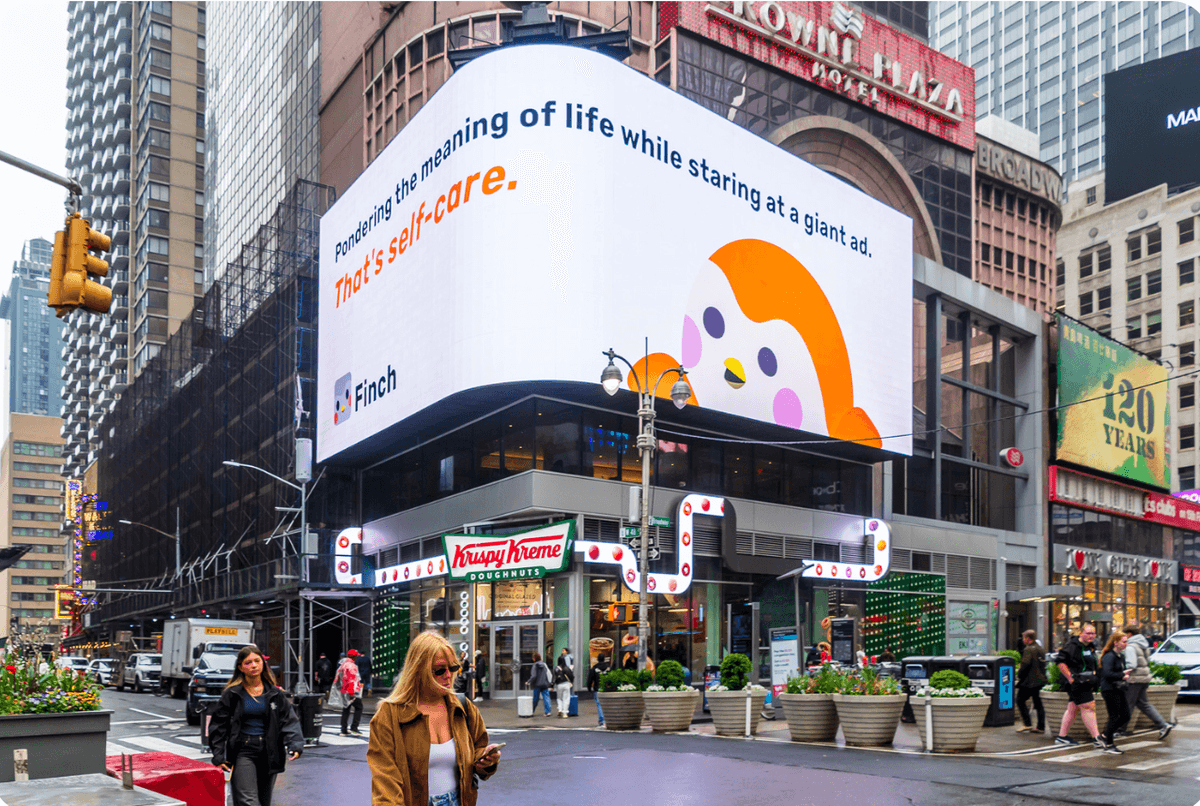
Out-of-home advertising, commonly called OOH or outdoor advertising, is one of the oldest and most effective marketing channels in the world. It is also one of the most misunderstood, especially for Canadian small and medium-sized businesses trying to figure out whether it belongs in their marketing mix in 2026.
This guide covers everything a Toronto or Ontario business owner needs to know. What OOH advertising actually is, the different types of billboards and outdoor formats available in Canada, what billboard advertising costs and rates look like in 2026, and why the shift to digital OOH is changing the economics for businesses that previously could not afford outdoor advertising at all.
What Is OOH Advertising?
OOH stands for out-of-home advertising. It refers to any advertising that reaches consumers while they are outside their home, in a public space, commuting, walking, or driving through a city or commercial area.
OOH advertising in Canada includes billboards, transit advertising, street furniture like bus shelters and benches, digital screens, and window displays. It is one of the few advertising channels that cannot be skipped, blocked, or scrolled past, which is a significant part of why it remains effective in an era of ad blockers and shrinking social media organic reach.
The OOH advertising market in Canada has grown consistently through 2024 and 2025, driven primarily by the expansion of digital OOH formats that have made the channel more flexible, measurable, and accessible than traditional static billboard formats ever were.
The Different Types of Billboards and OOH Formats in Canada
Understanding the different types of billboards and outdoor advertising available in Canada is the starting point for any business evaluating OOH as a marketing channel.
Traditional Static Billboards
The classic large format billboard. A printed vinyl or paper face mounted on a structure, typically roadside or on a building exterior. Static billboards in Canada are available in several standard sizes, with the most common being the bulletin at 14 feet by 48 feet and the poster at 10 feet by 22 feet.
Static billboards are the format most people picture when they think of billboard advertising. They are large, they are visible from distance, and they work for brands that need highway or major arterial road visibility across a broad geographic area.
The limitations are significant. A static billboard cannot be updated without physically reprinting and replacing the face, which takes days and costs hundreds to thousands of dollars depending on the size. There is no tracking, no QR interaction, and no ability to run time-sensitive promotions without planning weeks in advance.
Digital Billboards (Large Format DOOH)
Digital billboards are large format LED screens, typically roadside, that rotate advertising content from multiple advertisers throughout the day. A digital billboard can display six to eight different advertiser messages per minute, each on a roughly eight to ten second rotation.
Digital billboards in Canada are most common along major highways and arterial roads in major cities. In Toronto, the most visible concentrations are along the Gardiner Expressway, the DVP, Highway 401, and in major commercial corridors.
The advantage over static is immediate. Creative can be changed the same day. Time-sensitive promotions, event campaigns, and seasonal offers can be updated without reprinting. The limitation is that an advertiser shares screen time with multiple other brands simultaneously, and the typical eight second exposure window means messaging needs to be extremely simple to land effectively.
Transit Advertising
Transit advertising in Canada includes bus shelters, subway station advertising, bus wraps, streetcar advertising, and transit interior placements. In Toronto, Pattison Outdoor and Outfront Media are the primary transit advertising vendors operating through contracts with the TTC and Metrolinx.
Transit advertising reaches a captive commuter audience, particularly effective for brand messages that benefit from longer exposure time, since a commuter waiting at a platform or riding a train has more time to absorb a message than a driver passing a billboard at highway speed.
Transit advertising rates in Toronto vary significantly by format, placement, and campaign length. Bus shelter placements typically start at $800 to $2,500 per location per month. Subway station dominations and premium placements can run significantly higher.
Street Furniture and Urban Panels
Street furniture advertising includes bus bench ads, kiosk panels, and smaller format urban displays placed at eye level in pedestrian areas. These formats are common across Toronto neighbourhoods and commercial districts.
Street furniture formats reach pedestrian audiences at close range and eye level, which means creative can be more detailed than highway billboard advertising. The limitations are the static format, the inability to update without reprinting, and the fact that a bus bench ad in 2026 is such a saturated format in most Toronto neighbourhoods that it has become largely invisible to regular passersby.
Digital Window Screens (Storefront DOOH)
This is the fastest-growing format in Canada's OOH market and the one most Toronto small and medium-sized businesses are adopting in 2026.
A digital window screen is an LCD display mounted in a storefront window, visible from the street, playing the business's own promotional content or paid advertiser content on a loop. Unlike large format digital billboards, window screens are at pedestrian level, in neighbourhood commercial corridors, and reach the local audiences that matter most to independent businesses.
HotCrowd operates a network of street-facing digital screens and window displays across Toronto, and runs a dedicated window screen installation program at hotcrowd.ca for businesses that want a screen in their own storefront window.
Digital Street Screens (Neighbourhood DOOH)
This is the format HotCrowd operates at Queen Street West, Blue Jays Way near Rogers Centre, and Eglinton Avenue East. A digital screen placed in a high-traffic pedestrian corridor, displaying video content and rotating advertiser campaigns throughout the day.
Unlike large format highway billboards, neighbourhood digital screens reach a local, pedestrian audience at close range, with full motion video, QR code interaction, and the ability to update creative the same day. They are the most direct tool for a local Toronto business that wants physical world visibility without the cost and complexity of traditional OOH agencies.
What Does Billboard Advertising Cost in Canada?
Billboard advertising costs in Canada vary significantly by format, location, market size, and campaign duration. Here is an honest breakdown of what businesses actually pay in 2026.
Static Billboard Advertising Rates in Canada
Static billboard advertising in Toronto and major Ontario markets is primarily managed through large OOH agencies including Pattison Outdoor, Outfront Media, and Astral Media. Rates are typically quoted on a four-week basis.
A standard bulletin billboard in a Toronto suburban or highway location typically runs between $1,500 and $5,000 per four-week period. Premium locations in high-visibility corridors, near major interchanges, or in downtown Toronto can run $8,000 to $20,000 or more per four-week period. Production costs for printing and installation add $500 to $2,000 on top of the media rate for each new creative execution.
Minimum campaign lengths through traditional OOH agencies are typically four weeks, with discounts available for longer-term contracts. Most agencies require a booking lead time of two to six weeks before a campaign can launch.
Digital Billboard Advertising Rates in Canada
Digital billboard advertising rates in Canada are typically priced lower than static on a per-advertiser basis, because the screen is shared among multiple advertisers rotating throughout the day.
A digital billboard placement in a Toronto corridor through a traditional OOH agency typically runs from $1,500 to $6,000 per four-week period, depending on the location and the number of daily impressions. Premium highway digital bulletin placements can run higher.
Transit Advertising Rates in Toronto
Bus shelter advertising in Toronto through Pattison or Outfront Media typically runs $800 to $2,500 per location per month. Bus bench advertising runs $300 to $800 per location per month. Subway station advertising starts around $3,000 per period for standard placements and can reach $50,000 or more for full station dominations and premium formats.
HotCrowd Digital Screen Rates in Toronto
HotCrowd's neighbourhood digital screens in Toronto are priced significantly below traditional OOH and transit shelter contracts, with no agency markup, no minimum four-week commitment, and no production fees for creative updates.
Campaigns are available on daily, weekly, and monthly structures, with pricing based on screen location and campaign duration. Current screen availability and pricing is available at hotcrowdadvertising.com/contact or through hotcrowd.ca for window screen inquiries.
The key difference from traditional OOH pricing: no agency fee layered on top, no reprinting cost when the creative changes, and no minimum spend that requires a franchise-level budget to justify.
OOH in Marketing: Why It Still Works in 2026
With social media, Google Ads, email marketing, and a hundred other digital channels available, the natural question is whether OOH advertising is still relevant for a Toronto business in 2026.
The answer is not only relevant but increasingly valuable for a specific and important reason.
Digital advertising is getting noisier and more expensive. Social media reach is declining. Ad blockers are widespread. iOS privacy changes have degraded targeting precision. In this environment, OOH is one of the few channels that cannot be blocked, skipped, or opted out of.
A study by Nielsen found that OOH advertising generates the highest level of online activation per dollar spent of any traditional advertising channel. People who see an OOH ad are significantly more likely to search for the brand online afterward, which means OOH and digital advertising are not competing channels. They are amplifiers of each other.
For Canadian businesses specifically, the expansion of digital OOH formats has made outdoor advertising accessible at price points that were previously only available to national brands with agency budgets. A Toronto restaurant, dental clinic, realtor, or med-spa can now run a professional digital screen campaign in a high-traffic Toronto corridor for a monthly budget comparable to what they might spend on a single week of Google Ads.
Choosing the Right OOH Format for Your Toronto Business
The right OOH format depends on three factors: your audience, your geography, and your budget.
If your audience is primarily local, pedestrian, and neighbourhood-based: Digital street screens and window displays in your local corridor deliver the highest relevance and the strongest local brand recognition. HotCrowd's Queen Street West, Blue Jays Way, and Eglinton Avenue screens, along with the hotcrowd.ca window screen program, are built for exactly this use case.
If your audience is regional and commuter-based: Digital or static highway billboards along major Toronto arteries like the Gardiner, DVP, or Highway 401 reach a broader regional audience but at significantly higher cost and with less local specificity.
If your budget is limited and flexibility matters: Digital OOH formats, including HotCrowd's neighbourhood screens, are the right choice because they allow shorter campaign durations, same-day creative updates, and per-impression costs that are far lower than traditional static formats.
If your brand has national reach and consistent long-term messaging: Traditional large format static billboards in premium locations can build scale impressions over long campaign periods, though the inflexibility and cost are significant limitations for most small and medium-sized businesses.
Getting Started With OOH Advertising in Toronto
If you are a Toronto business ready to explore out-of-home advertising for the first time, or looking to shift from traditional OOH formats to a more flexible and cost-effective digital alternative, HotCrowd is the starting point.
View available Toronto screen locations: hotcrowdadvertising.com/billboards
Start your digital screen campaign: hotcrowdadvertising.com/digital-advertising-management
Apply for a digital window screen at your storefront: hotcrowd.ca
Frequently Asked Questions
What does OOH stand for in marketing? OOH stands for out-of-home advertising. It refers to any advertising format that reaches consumers while they are outside their home, including billboards, digital screens, transit advertising, bus shelters, and window displays.
What are the different types of billboards in Canada? The main types of billboards and OOH formats in Canada are traditional static billboards, large format digital billboards, transit advertising including bus shelters and subway placements, street furniture including bus benches and urban panels, digital window screens, and neighbourhood digital street screens like HotCrowd's Toronto locations.
How much does billboard advertising cost in Canada? Static billboards in Toronto range from $1,500 to $20,000 or more per four-week period depending on location and size. Digital billboard placements run $1,500 to $6,000 per period for shared rotation formats. Transit shelter advertising runs $800 to $2,500 per location per month. HotCrowd's neighbourhood digital screens are priced significantly below these rates with no agency fees or minimum commitments.
What are billboard advertising rates in Toronto? Billboard advertising rates in Toronto vary by format, location, and agency. Traditional OOH through agencies like Pattison and Outfront typically starts at $1,500 per four-week period for suburban locations and rises to $20,000 or more for premium downtown placements. HotCrowd's self-serve digital screens offer comparable local reach at lower rates with no agency markup.
Is OOH advertising still effective in 2026? Yes. OOH advertising generates the highest online activation per dollar spent of any traditional channel according to Nielsen research. Digital OOH formats in particular have made outdoor advertising more flexible, measurable, and cost-effective than at any previous point, making it genuinely competitive with digital advertising channels for local reach and brand recognition.
What is the difference between OOH and DOOH advertising? OOH refers to all out-of-home advertising including both static and digital formats. DOOH specifically refers to digital out-of-home advertising, meaning LED screens, digital window displays, and other electronic formats that can display motion video, update content in real time, and incorporate interactive elements like QR codes.
HotCrowd is Toronto's self-serve digital out-of-home advertising platform. We connect local businesses with high-traffic digital screen locations across Ontario, with no agency fees and no long-term contracts. Learn more at hotcrowdadvertising.com or visit hotcrowd.ca for digital window screen inquiries.